
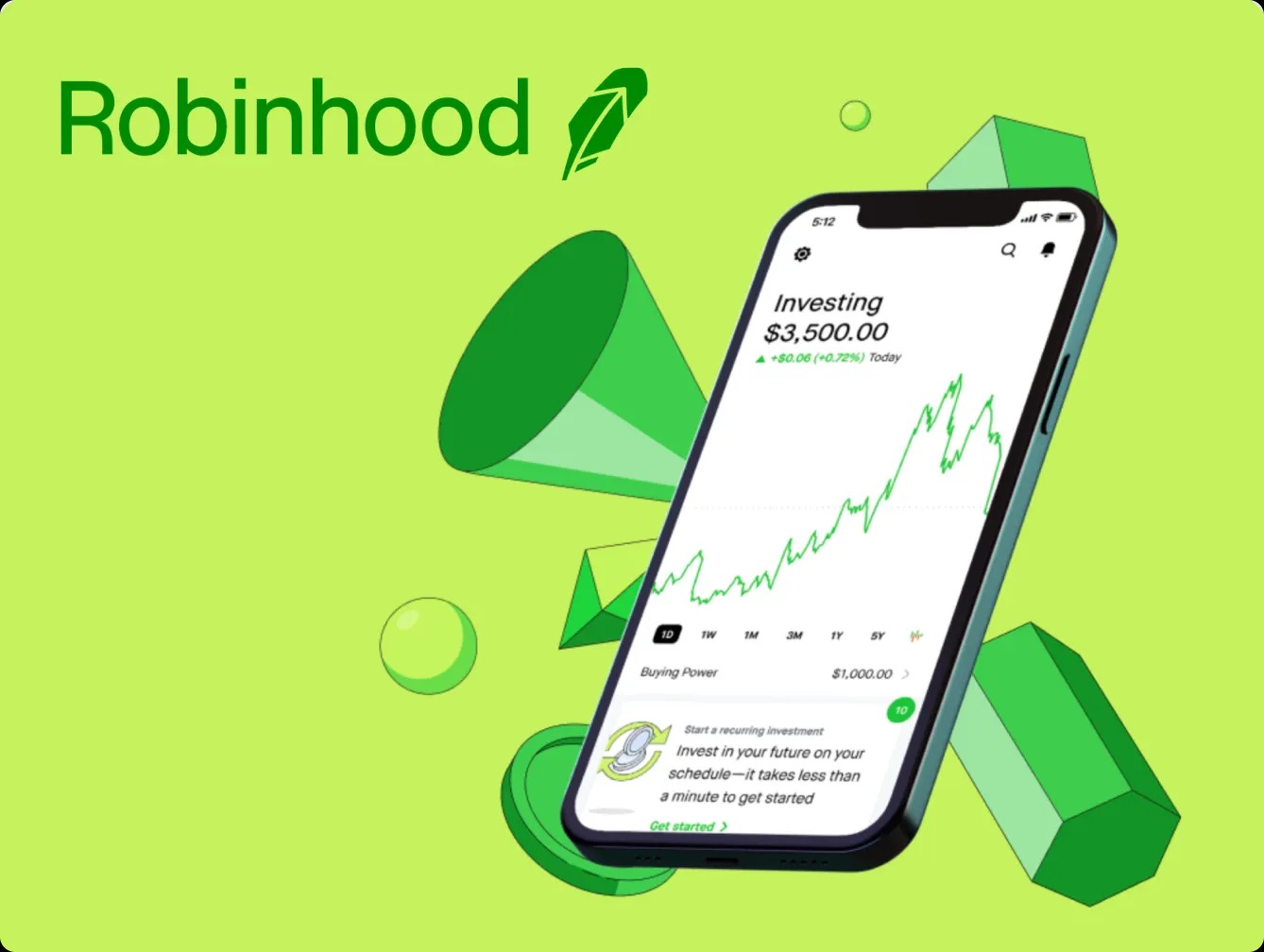
Robinhood is a popular investment platform designed to make trading accessible to everyone, especially beginners. With its intuitive interface and zero-commission model, the app has revolutionized how people invest in stocks, ETFs, options, and even cryptocurrencies. Let’s dive into how Robinhood works and why it’s the go-to choice for new investors.
How Robinhood Works
Robinhood simplifies the investment process by allowing users to trade directly from their smartphones or desktops. Here’s how it works:
- Account Creation: Sign up by providing basic information and verifying your identity.
- Funding Your Account: Link your bank account to deposit funds.
- Trading: Search for stocks, ETFs, or other assets, and execute trades with just a few taps.
- Monitoring Your Portfolio: Track your investments in real time through the app.
Robinhood’s clean design eliminates the intimidating complexities often associated with traditional brokerages, making it ideal for first-time users.
Key Benefits of Robinhood
- Zero Commissions
Unlike traditional brokers that charge fees for each trade, Robinhood offers commission-free trading. This means you can buy and sell without worrying about additional costs eating into your profits. - User-Friendly Interface
Robinhood’s app is straightforward and visually appealing, making it easy to navigate. Beginners can find everything they need-market data, watchlists, and trade history-right at their fingertips. - Fractional Shares
One of the standout features is the ability to purchase fractional shares. Instead of buying a whole share of an expensive stock like Tesla or Amazon, you can invest as little as $1. This feature allows beginners to build a diversified portfolio even with limited funds. - Accessibility
Robinhood is available for both iOS and Android devices, as well as through a web platform. The app’s low barrier to entry makes it possible for anyone to start investing, regardless of their financial background.
Start Small with Fractional Shares
If you’re just getting started, fractional shares are a game-changer. They allow you to own a portion of high-priced stocks, making it easier to diversify your portfolio with minimal risk. For example, if a stock costs $1,000 but you only want to invest $50, Robinhood lets you buy a fraction of that stock.
Why Beginners Love Robinhood
Robinhood’s success lies in its simplicity and accessibility. It removes the technical jargon and complicated processes, empowering users to make informed decisions. Whether you’re looking to invest $10 or $10,000, Robinhood gives you the tools to grow your money with confidence.
By choosing Robinhood, you’re joining millions of investors who have taken their first steps toward financial independence. Ready to get started? Download the app today and unlock the power of investing!
How to Sign Up and Set Up Your Account on Robinhood
Getting started with Robinhood is quick and straightforward. Follow this step-by-step guide to create your account, secure it, and even score a free stock as a bonus!
Step 1: Download the Robinhood App
- Visit the App Store (iOS) or Google Play Store (Android).
- Search for Robinhood: Stocks & Crypto and download the app.
- Alternatively, you can sign up via the Robinhood website if you prefer using a desktop.
Step 2: Register for an Account
- Open the app and click Sign Up.
- Enter your email address and create a strong password.
- Provide your personal details, including:
- Full name
- Date of birth
- Social Security number (required for tax purposes in the U.S.)
- Address and phone number
Important Note: Robinhood requires you to be at least 18 years old and a U.S. citizen or permanent resident to create an account.
Step 3: Verify Your Identity
To comply with financial regulations, Robinhood will ask you to verify your identity. You’ll need:
- A government-issued ID (like a driver’s license or passport).
- Bank details to link your account for deposits and withdrawals.
Once you’ve submitted your information, approval typically takes less than 24 hours.
Step 4: Fund Your Account
After approval, you can link your bank account to deposit funds. Follow these steps:
- Tap on Account > Transfers.
- Select Link Account and enter your banking details.
- Choose the amount to deposit and confirm.
Robinhood also offers instant deposits for up to $1,000, so you can start trading right away.
Step 5: Secure Your Account
To protect your investments, take these security measures:
- Enable Two-Factor Authentication (2FA):
- Go to Account > Settings > Security.
- Activate 2FA to receive a unique code each time you log in.
- Create a Strong Password:
Use a mix of upper- and lowercase letters, numbers, and symbols. Avoid common words or personal information. - Monitor Account Activity:
Regularly review your transaction history and enable alerts for suspicious activity.
Score a Free Stock
Robinhood offers a referral program where you and your friend can each receive a free stock when you sign up using their referral link. The free stock could range from a few dollars to over $200. Don’t miss this easy bonus to start your investment journey!
Why Security Is Essential
Investing involves handling sensitive financial information. By securing your Robinhood account with strong passwords and 2FA, you can protect yourself from unauthorized access and potential losses.
Start Trading with Confidence
With your account set up and secured, you’re ready to explore the exciting world of investing. Follow these steps to ensure a smooth and secure start. Remember, every successful investor begins with their first trade-why not make yours today?
Funding Your Account: Start Small, Think Big
The next step in your Robinhood journey is funding your account. Don’t worry-it’s a simple process, and you don’t need a lot of money to get started. Let’s walk through how to link your bank account, deposit funds, and why starting small is the smartest strategy for beginners.
How to Link Your Bank Account
Robinhood makes it easy to connect your bank account for seamless deposits and withdrawals. Follow these steps:
- Open the App: Log in to your Robinhood account.
- Go to the Account Tab: Tap on the menu (three lines in the top-right corner) and select Transfers.
Link a Bank Account:
- Choose your bank from the list of major institutions.
- Enter your online banking credentials to connect instantly.
Alternatively, you can manually link your account by providing your bank’s routing and account numbers.
Use a checking account for faster processing. Deposits typically take 1-3 business days, but Robinhood offers instant deposit credit up to $1,000 for immediate trading.
How to Deposit Funds
Once your bank account is linked, depositing money is straightforward:
- Go to Transfers in the app.
- Select Transfer to Robinhood.
- Enter the amount you want to deposit and confirm.
You can also set up recurring deposits for consistent investing, a great option for building long-term wealth.
Why Start Small?
Investing can feel intimidating at first, but starting small has its advantages:
Lower Risk:
With a small initial investment, you can learn the ropes without worrying about significant losses.
Build Confidence:
Starting with just $10 or $20 helps you get comfortable with the platform, understand how trades work, and monitor your portfolio’s performance.
Explore Fractional Shares:
Robinhood lets you invest in fractional shares, so you don’t need to buy a full share of high-priced stocks. For example, with $10, you can own a portion of companies like Apple or Tesla.
Start with $10
If you’re unsure how much to deposit, begin with just $10. Use this to buy a fractional share of a well-known stock or ETF. This approach allows you to gain experience while minimizing financial risk.
Think Big, Start Small
The beauty of investing on Robinhood is its flexibility. You can start with as little or as much as you’re comfortable with, and over time, scale up as you gain confidence and expertise.
Ready to Fund Your Future?
By starting small, you’re setting a solid foundation for your investing journey. Link your bank account today, deposit your first $10, and watch how even a modest investment can grow into something significant over time.
Choosing Assets: Stocks, ETFs, or Crypto?

Robinhood offers a wide range of investment options, making it an excellent platform for beginners looking to explore the financial markets. However, with so many choices, deciding where to invest your money can feel overwhelming. Let’s break down the main asset types available, their pros and cons, and the best options for new investors.
Types of Assets on Robinhood
- Stocks
Stocks represent ownership in a company. When you buy a share, you’re investing in the company’s future success.- Examples: Apple (AAPL), Amazon (AMZN), Coca-Cola (KO).
- ETFs (Exchange-Traded Funds)
ETFs are collections of stocks, bonds, or other assets grouped into a single fund. They’re designed to provide diversification in a single investment.- Examples: SPDR S&P 500 ETF (SPY), Vanguard Total Stock Market ETF (VTI).
- Cryptocurrencies
Crypto is a digital asset based on blockchain technology. Robinhood allows trading of popular coins like Bitcoin and Ethereum.- Examples: Bitcoin (BTC), Ethereum (ETH), Dogecoin (DOGE).
Pros and Cons for Beginners
- Stocks
- Pros:
- High growth potential for individual companies.
- Easy to understand and research.
- Cons:
- Higher risk if the company underperforms.
- Requires careful analysis to pick winners.
- Pros:
Ideal For: Beginners looking to invest in well-known companies.
- ETFs
- Pros:
- Instant diversification reduces risk.
- Affordable: Some ETFs have low expense ratios.
- Cons:
- Limited growth compared to individual stocks.
- Requires understanding of fund composition.
- Pros:
Ideal For: Beginners who want a low-risk, hands-off investment option.
- Cryptocurrencies
- Pros:
- High potential for rapid gains.
- Open 24/7 for trading.
- Cons:
- Extremely volatile and risky.
- Limited regulation.
- Pros:
Ideal For: Beginners with a high risk tolerance and interest in digital assets.
Start with Large-Cap Stocks
If you’re just starting, stick to large-cap stocks of established companies. These stocks are more stable and less likely to experience extreme price swings, making them ideal for new investors. Think of companies like Microsoft, Google, or Johnson & Johnson, which have a proven track record of success.
Diversify to Minimize Risk
One of the golden rules of investing is diversification. Instead of putting all your money into one asset, spread it across multiple options to balance risk and reward. For example, you can allocate your portfolio like this:
- 60% Stocks (large-cap companies).
- 30% ETFs (broad market funds).
- 10% Crypto (Bitcoin or Ethereum).
Which Assets Should You Choose First?
For most beginners, a combination of ETFs and a few large-cap stocks is a smart way to start. As you gain more experience, you can experiment with cryptocurrencies or more niche investments.
Start Building Your Portfolio Today
Robinhood gives you access to a diverse range of assets, allowing you to tailor your investments to your goals. Whether you’re looking for stability, growth, or excitement, there’s something for everyone. Choose wisely, and watch your money grow!
First Trades: Buying and Selling Made Easy
Executing your first trade on Robinhood is an exciting milestone, and the app’s intuitive interface makes the process straightforward. Whether you’re buying your first stock or selling to lock in profits, Robinhood has the tools to help you trade confidently. Let’s go through the steps and explore tips for tracking the market and managing risk.
How to Buy Your First Stock on Robinhood
- Search for a Stock
- Open the app and use the search bar to find a stock you’re interested in (e.g., Apple).
- Review the stock’s details, including current price, historical performance, and market news.
- Select ‘Trade’
- Tap the green Trade button, then choose Buy.
- Enter the Amount
- Decide how much money you want to invest. You can:
- Buy whole shares.
- Purchase fractional shares (e.g., $5 worth of Apple stock).
- Decide how much money you want to invest. You can:
- Choose Your Order Type
Robinhood offers different order types:- Market Order: Buys immediately at the current price.
- Limit Order: Buys only if the stock hits a specific price you set.
- Confirm the Trade
- Review the details of your order.
- Swipe up to complete your purchase. Congratulations-you’ve just made your first trade!
How to Sell a Stock
- Go to your Portfolio and tap on the stock you want to sell.
- Select Trade, then choose Sell.
- Enter the number of shares (or dollar amount) you want to sell.
- Confirm your order, and the sale will process immediately if the market is open.
Tracking Market Movements in the App
Robinhood provides powerful tools for monitoring your investments and the broader market:
- Real-Time Updates:
- Check live price changes and market trends directly on the stock’s page.
- Watchlists:
- Create a list of stocks you’re interested in to track their performance over time.
- News Feed:
- Stay informed with curated news updates related to your portfolio and watchlist.
Use the ‘Stop Loss’ Feature
The Stop Loss order is an essential risk management tool for beginners. Here’s how it works:
- Set a price below the current stock value.
- If the stock price drops to or below this level, Robinhood will automatically sell it.
For example, if you buy a stock at $50, you can set a stop-loss at $45. This ensures you limit your losses if the price unexpectedly drops.
Minimize Risk, Maximize Rewards
While buying and selling stocks is simple, it’s crucial to have a plan. Avoid emotional trading and focus on your long-term goals. Using tools like stop-loss orders and tracking market trends will help you make informed decisions.
Your First Step Into Investing
Your first trade is the beginning of an exciting journey toward financial growth. Start small, keep learning, and watch as your portfolio grows over time. Ready to place your first trade? Log in to Robinhood and take the leap today!
Common Mistakes to Avoid
Investing can be a rewarding experience, but it’s easy to make costly mistakes, especially as a beginner. Being aware of common pitfalls can save you from unnecessary losses and help you build a successful investment strategy. Here are some mistakes you should avoid on Robinhood.
Emotional Trading
One of the biggest mistakes new investors make is emotional trading. This happens when you buy or sell stocks based on fear, greed, or excitement rather than logical analysis.
- Fear-based selling: You panic and sell when a stock drops, missing the chance for recovery.
- Greed-based buying: You jump in on a stock because it’s trending or because you’re chasing quick gains.
Stick to your investment plan and avoid making decisions based on short-term market fluctuations. Set specific goals and be patient-successful investing takes time.
Lack of Portfolio Diversification
Putting all your money into one or two stocks is risky. A lack of diversification increases the chance that a downturn in one area could significantly impact your entire portfolio.
- Example: If you invest all your funds in tech stocks, a market correction in the tech sector could lead to large losses.
Solution: Diversify your portfolio by investing in a mix of stocks, ETFs, and other assets like bonds or real estate. This way, you can reduce the risk of a total loss.
Avoid Chasing ‘Hyped’ Stocks
It’s easy to get caught up in the excitement when a stock is trending or being hyped in the news. But remember: What’s trending today can crash tomorrow. Always do thorough research before buying into a stock based solely on hype.
Your First Steps Toward Long-Term Investing
While trading can offer quick returns, long-term investing is where the real wealth-building potential lies. Understanding the difference between trading and investing-and why a long-term approach works best-will put you on the right path to financial success.
The Difference Between Trading and Investing
- Trading: The process of buying and selling stocks frequently to capitalize on short-term price movements.
- Investing: Buying stocks or assets and holding them for a long period, based on the expectation that the asset’s value will grow over time.
While trading can be exciting, long-term investing minimizes risk by avoiding the volatility of short-term market movements.
Why Focusing on Long-Term Goals Is Key
Long-term investing reduces the stress of daily market fluctuations and gives your investments time to grow. Here’s why it’s so effective:
- Compound Growth: The longer you hold your investments, the more you benefit from the power of compound interest.
- Stability: Long-term investments tend to be more stable than those bought and sold on short-term movements.
- Reduced Fees: Frequent trading leads to higher fees. With long-term investments, you pay fewer transaction fees and taxes.
Set Up Automatic Monthly Deposits
To build wealth steadily, consider setting up automatic monthly deposits. This strategy, known as dollar-cost averaging, means you invest the same amount of money on a regular basis, regardless of market conditions. This smoothens out the highs and lows of market movements and reduces the risk of investing a lump sum at the wrong time.
FAQs About Robinhood
As a beginner, you may have some questions about Robinhood and how it works. Here are answers to some of the most common inquiries.
“Do I Have to Pay Taxes on My Gains?”
Yes, you will need to pay taxes on any capital gains (profits from selling stocks) you earn. The rate at which you are taxed depends on how long you hold the investment:
- Short-term gains (less than 1 year) are taxed at your regular income tax rate.
- Long-term gains (over 1 year) are taxed at a lower rate.
“Are There Any Hidden Fees?”
No, Robinhood is known for having no commission fees on trades. However, be aware that other charges might apply, such as for certain types of orders, margin trading, or account inactivity. Always read the terms and conditions to stay informed.
“How Do I Withdraw My Money?”
To withdraw funds from Robinhood, follow these steps:
- Go to Account > Transfers.
- Select Transfer to Bank.
- Choose the amount you want to withdraw and confirm.
Withdrawals typically take 1-3 business days to process.
Keep a Record of Your Transactions
To simplify tax filing, keep track of all your Robinhood transactions throughout the year. Robinhood provides an annual tax document that summarizes your capital gains and losses. Keeping your own records ensures you’re fully prepared at tax time.
Start Your Investment Journey Today!
Robinhood is the perfect platform for anyone looking to dip their toes into the world of investing. By avoiding common mistakes, following long-term investment strategies, and staying informed with essential FAQs, you’ll be on your way to achieving financial success.
Don’t wait-download the app and start investing today! The earlier you start, the more time your money has to grow. Happy investing!
 Business Ocean